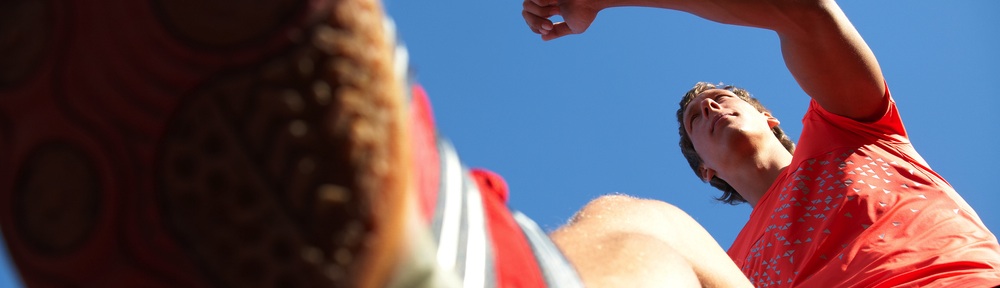

From the age of 16, Taylor Gough’s body was a finely tuned machine. A professional rugby player who came up through the youth team at Leicester Tigers, his weeks revolved around training: heavy weights, tactical drills, contact sessions, cardio. “My body served a purpose and I ate to fuel it.”
Then, aged 20, he woke up in hospital unable to move or talk. “I had to mime to the nurse, ‘What happened?’ And it was during Covid – I didn’t have any family there, which made it 10 times worse.”
He later learned that 10 days earlier he had crashed his car into a tree. If his body hadn’t been so used to the impact of contact sports, he would probably be dead. A tracheostomy was fitted because he couldn’t breathe on his own. He had been paralysed from the chest down. “They said, ‘You’re not going to walk again. You’re going to be in a wheelchair, but you will be completely independent.’ I just had to learn how to do that.”
The adjustment was life-changing. “As well as losing function, I lost my identity, because I thought I was a rugby player and that’s all I was. I used to live, eat, breathe, sleep rugby.”
At the spinal unit in Sheffield, Gough began relearning everyday tasks – how to go to the toilet, get on and off a sofa, get in and out of a car – and learning how to use a wheelchair. “It doesn’t happen instantly. It’s almost the same as when you’re a baby and you’re learning to walk.”
There were challenging moments. One night, he woke after falling asleep on his sofa, but didn’t have the strength to push himself up, and had to phone his dad and brother for help. “I’d gone from being this big, tough rugby player who could do anything to someone who needed help to get off the sofa.”
He also gained weight. “I wasn’t eating as much as when I played rugby” – back then he was hitting 5,000 calories a day – “but I was still eating way too much because you don’t burn many calories.”
The turning point for Gough came when he found his way back to exercise. Physiotherapy, counselling and training at rehabilitation centre alongside athletes with similar stories helped him reconnect with the resilience he’d built as a rugby player – and use it to take control of his life. “It allowed me to focus on what was going to get me better and make my life easier, which was getting fitter, faster, stronger and lighter.” He also fell back in love with sport, trying wheelchair basketball and tennis before returning to rugby, now in a wheelchair, again representing Leicester Tigers. He has competed in para-CrossFit and now para-canoes. Racing for England, he won bronze at the European Championships in the Czech Republic, with former rugby teammates travelling to support him. “It felt amazing to be on the start line, to get that competitive feeling back.”
He married Kylie, a Paralympian wheelchair rugby player, in 2025, and their home in Surrey is one of joyful sporting rivalry, “pushing each other to go further”. Now 25, Gough trains daily and sticks to 1,500 calories a day. His routine includes “pretty much the same weights as I’ve always done – bench press, pull-downs, chin-ups – apart from no legs now”, plus SkiErg cardio sessions and canoeing twice a week at the British Canoeing Centre in Nottingham. He hopes to compete for Great Britain in handcycling at the LA 2028 Paralympic Games.
“I used to compare myself with who I was before my accident. When you do that, you just drive yourself into a deep, dark hole.” Now, he says, “I look at the rugby days and I’m glad I got to do that. I compare myself with the person lying in that bed, and how far I’ve come since then.” It’s only increased his drive to look after his body. “I want as much out of my body as I can get, because the fitter and healthier I am, the better quality of life I’m going to have.”
• Taylor Gough’s rehab was supported by the Matt Hampson Foundation.
