British surgeons could perform the world's first full face transplant within months after they were given the go-ahead today.
The consultant surgeon, Peter Butler, was granted permission for the pioneering surgery by the ethics committee at the Royal Free hospital in Hampstead, north London.
Mr Butler, who has been researching the plan for years, said he was "delighted" by the news. He said he hoped the operation could be performed within a year but insisted it was not a "face race".
The decision was immediately criticised by the Royal College of Surgeons, which still has "grave concerns" about face transplantation. It said the Royal Free committee decision was dependent upon a RCS report due out next month. The report is expected to suggest minimum requirements for such operations.
Mr Butler, who is chairman of the Face Trust said: "I feel delighted that we have got the go-ahead. It's been a long journey but this is just the beginning, really. The most important part of the process starts now, which is selection of the patients."
Mr Butler's team has been approached by 34 patients from all over the world but he wants more people to come forward now approval has been granted. His team will choose four patients from the UK or Ireland for operations, possibly six months apart.
The patients are all likely to have pan-facial disfigurement - which means the whole face has been affected by injury, such as severe burns spreading to the scalp or ears.
"These patients will have already undergone reconstructive surgery - perhaps they will have had 50 to 70 reconstructive operations," Mr Butler said. "They have reached the end of the reconstructive ladder and there's nothing more it can offer them."
Such patients are still affected by their injuries, such as not being able to fully close their mouth or eyelids, he said.
"Then they have the problem of integration into society, of being able to walk down the street without anybody staring at them. That's all these people want - to be normal."
The full transplant would be carried out in a 10 -12-hour operation. Mr Butler, 44, who has worked at Royal Free for seven years, said he hoped face transplants would become the first choice in reconstructive surgery if the operation proved a success.
Studies have shown that public support for face transplants is high, he said, and much has been done to allay people's fears. The operation will involve removing skin, underlying fat and various blood vessels, arteries and veins from the donor. After the operation, the patient will have to take immunosuppressant drugs to help prevent rejection of the new tissue.
In a statement, the Royal College of Surgeons said: "The college still has grave concerns about face transplantation and will continue to advocate a cautious approach, but in the light of research over the last three years and more recent evidence the working party will suggest minimum requirements that must be fulfilled before a unit or institution should contemplate undertaking facial transplantation.
" We hope that the outline of minimal requirements will be of assistance to ethical review bodies and we understand that the Royal Free committee will review its decision in the light of our report when it is published. We would urge the trust not to allow this surgery to proceed until that review has taken place."
The college added that the working party's chairman, Sir Peter Morris, had expressed his concern about face transplants to the Royal Free hospital trust and the chief medical officer, Sir Liam Donaldson.
Changing Faces, the national charity for people with facial disfigurement, gave a cautious welcome to the news but said it would have preferred if the ethics committee had waited for the RCS recommendations to be published next month.
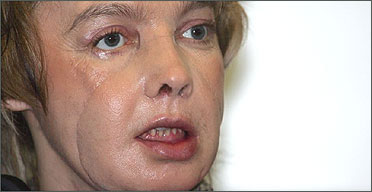
Surgeons at a Cleveland clinic in Ohio in the United States are also selecting suitable patients for an operation there. Last November, the world's first partial face transplant took place in France. A team of surgeons led by Professor Jean-Michel Dubernard carried out the operation on 38-year-old Isabelle Dinoire.
